
Planning from abroad
Couples who write to me from abroad often start with the same question: can we actually get married in Spain? Yes, you can, but the legal part depends on where you live. Here is what I’ve learned photographing weddings in Catalonia and talking to couples about it.
I’m a photographer, not a lawyer, so take this as a starting point and check the details with the Civil Registry, your consulate or a wedding planner. Rules can change.
A civil wedding in Spain. To marry at a Spanish Civil Registry, at least one of you normally has to be Spanish or to have been legally resident in Spain for around two years. You’ll need passports, full birth certificates, a certificate showing you are free to marry and proof of residence, often with an apostille and a sworn translation into Spanish. The process can take several months.
A church wedding. A Catholic wedding is recognised by Spanish law, and couples who don’t live in Spain can have one. The paperwork goes through your parish at home and the parish where you’ll get married, so allow plenty of time.
A symbolic ceremony. This is what most couples from abroad do. You sign the legal papers at home, before or after the trip, and celebrate your ceremony here: in a garden, among vineyards, under an old olive tree or with the sea behind you. It can be led by a celebrant, a friend or someone from your family, in any language.
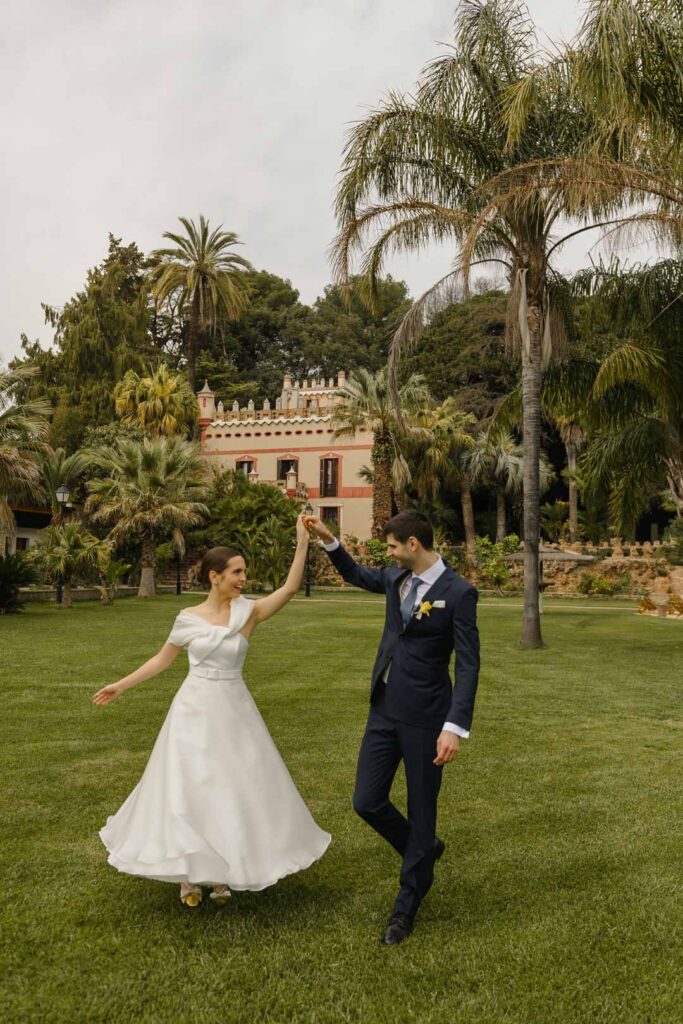
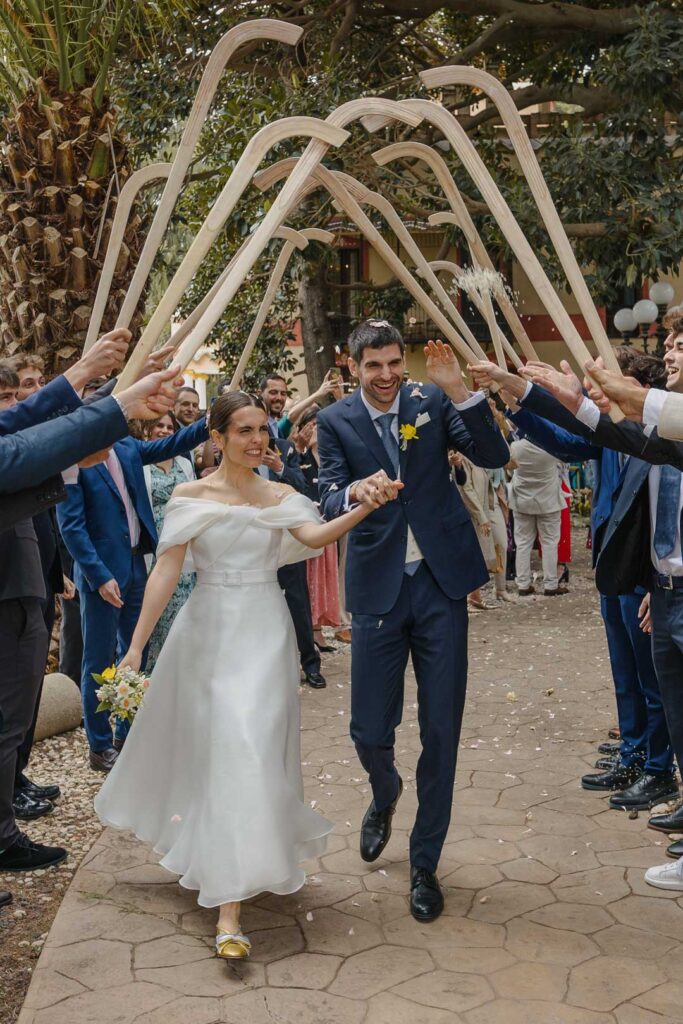
Exactly like a wedding. There are vows, rings, readings, music, tears and an exit with petals. Your guests won’t notice any difference, and neither will your photos. Because it isn’t tied to a registry office, you can choose the time of day, so the ceremony can be later in the afternoon, when the light is softer.
Most of the venues I work at in Catalonia have a spot for the ceremony on the estate itself, so the whole day happens in one place. You can see some of them in Wedding venues in Catalonia.
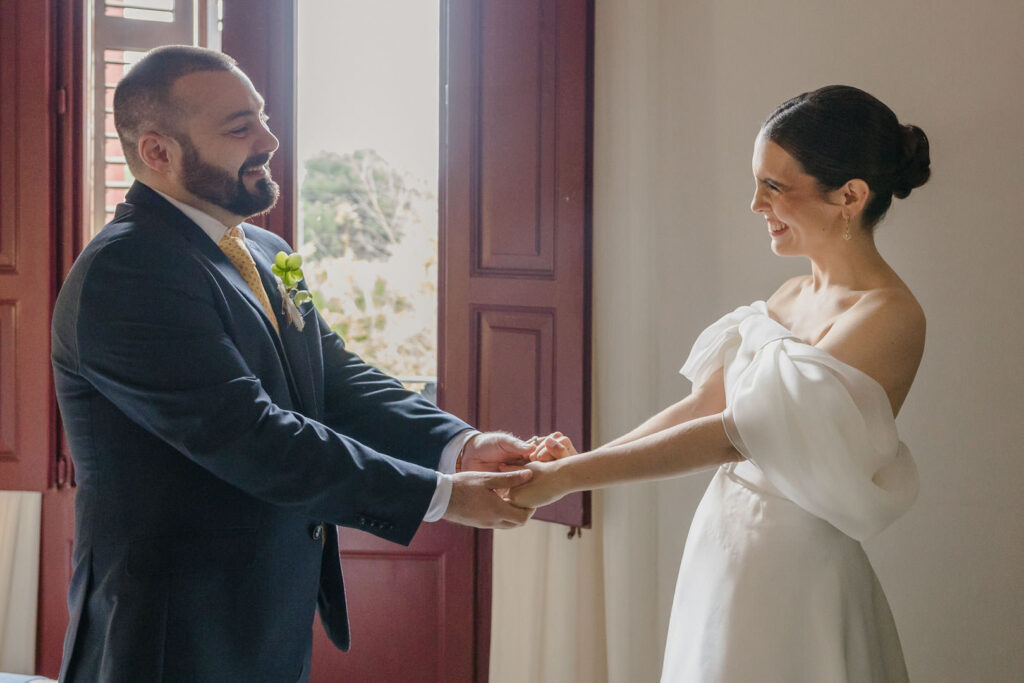
Start with the venue and the date. Popular venues and the best months (May, June and September) often go a year or more in advance. Once you have them, you can book the rest, and a lot of it can be done online.
With me, we can do everything by email and video call, in English. If you can, visit the venue once before the wedding; if not, don’t worry: many couples don’t, and the day still goes beautifully. For your guests, Barcelona-El Prat has flights from all over the world, and Reus and Girona airports are close to many venues.
If you’re still deciding when to come, have a look at the best time of year to get married in Catalonia, and at what a Spanish wedding day looks like: dinner starts late and the party goes on into the night.
Yes, but for a civil wedding at least one of you normally needs to be Spanish or to have been legally resident in Spain for about two years. If neither of you lives here, the usual options are a Catholic church wedding, which is recognised by Spanish law, or signing the papers at home and having a symbolic ceremony in Spain.
No. A symbolic ceremony has no legal value on its own, so you sign the legal part at a registry office in your country, before or after the trip. For you, your guests and the photos, it is a real wedding ceremony.
Yes. A symbolic ceremony can be in English, in two languages or in any language you like, led by a celebrant, a friend or someone from your family.
Popular venues and dates in May, June and September often go a year or more in advance, so start with the venue and the date. Once you have them, it is a good moment to book your photographer.
Yes. We can do the emails, a video call to plan everything and the wedding day itself in English.
More about how I work with couples from abroad: Destination wedding photographer in Catalonia & Spain.
Your wedding
Tell me your date and place and I’ll let you know if I’m available. I only photograph one wedding per day, and we can do everything in English, from the first email to the wedding day.